

The Bike
A childhood victory against expectations, labels, and gravity.

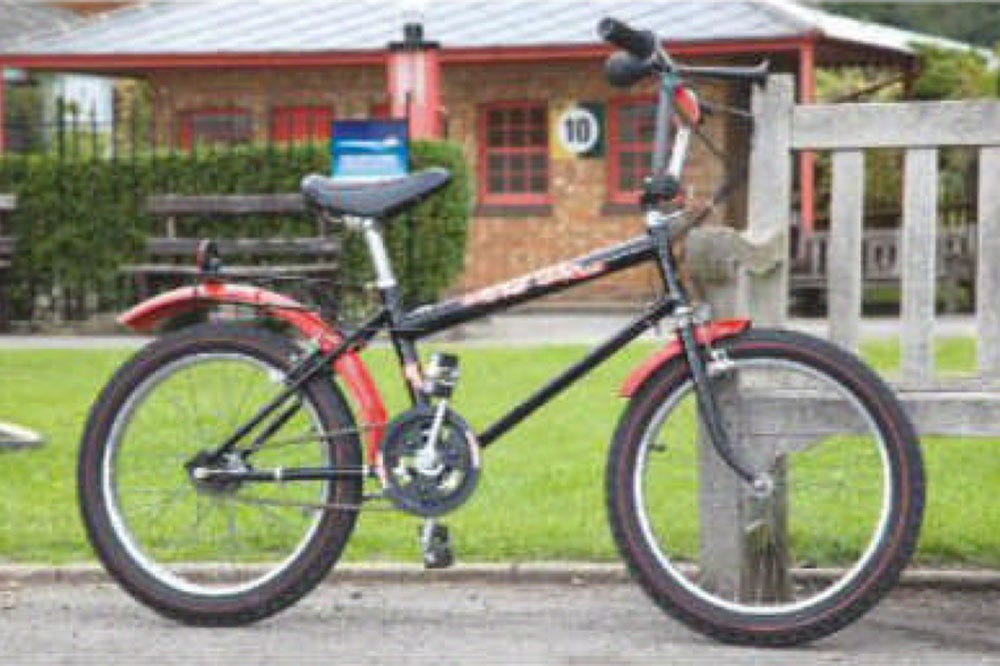
Growing up autistic in the 1970s wasn’t just tough — it was a daily collision with expectations I never asked for and could never quite meet. Back then, if you didn’t fit the template of an “ordinary child,” the world didn’t adapt; it blamed you for not adapting to it. Doctors and professionals told my mum and dad — often while I was in the same room — to put me in an institution and forget about me.
He’ll never amount to anything, they said.
He’ll never do what other kids do.
My parents didn’t listen, thank God. But the decisions they faced, and the trauma those years carved into me, is a whole other story. This one is about a different proclamation made about me — one that became surprisingly important:
“He’ll never be able to ride a proper bike.”
A “proper bike,” of course, being a two-wheeler.
Because of dyspraxia — common in autistic people, but in the 70s often mistaken for mild cerebral palsy — I struggled with balance. I walked with an obvious limp, and the neighbourhood kids never let me forget it. Walking home from school, I’d be called names like “spastic” and worse. Balance beams, wobble boards and physiotherapy became part of my childhood routine, all in the hope of fixing the way I walked and stopping the never-ending teasing.
Between the ages of six and twelve, I rode a tricycle. Not because it was fun — because I couldn’t ride anything else. Every past attempt at a two-wheeler ended the same way: instability, fear, embarrassment. The training wheels never stabilised me. My body just didn’t work that way yet.
Then, around the age of 11 or 12, I met Darren.
We became friends after he saw me being picked on for riding my tricycle and stepped in — no hesitation, no judgement, just a kid doing the right thing. After that, we were inseparable that summer, riding around the neighbourhood together. He was fascinated by how the side wheel of my trike lifted when I cornered at speed, like some unintentional stunt show. He even wanted to try it himself.
One day the conversation shifted.
“Why do you ride a tricycle?” he asked.
I told him the truth: I’d love to ride a proper bike — I just couldn’t. Not when we tried. Not ever.
Darren didn’t accept that.
“Well,” he said, matter-of-factly, “why don’t we try again? I’ll help you.”
So began one of the most important weeks of my childhood.
Before BMXs took over every playground, Darren had an old Grifter — a heavy, solid beast of a bike, built like it was forged in a shipyard. Over five days, I fell off that thing more times than I can count. But the Grifter kept going — and so did Darren. He was patient, steady, encouraging. He noticed that part of my lack of balance came from the way my feet pointed at slightly odd angles. We worked on correcting that. Then we worked on posture. And gradually — unbelievably — the wobbling straightened out.
By the end of the week, I was riding.
Not perfectly, not gracefully, but riding. Two wheels. Balance. Movement. Something the experts said would never happen.
But instead of announcing it immediately, we decided to wait. We wanted to be absolutely sure I could repeat it — not just a fluke, but a skill I owned. So for a few more days, we practised in secret.
Finally, one afternoon, we planned the reveal.
My mum was at the kitchen window washing dishes. Darren and I waited until the exact moment she looked up — and I rode out into the car park on his Grifter. I circled, slowly at first, then faster, close enough for her to see my face and realise it was me. Her expression said everything: shock, pride, relief, disbelief.
The doctors had been wrong. Spectacularly, beautifully wrong.
Within days, I had my first proper bike — a Grifter XL. Slightly out of step with the BMX craze beginning at the time, but perfect for me. My mum, being extremely overprotective, insisted I wear a crash helmet at all times. I complied… until I left the garden, at which point the helmet usually came off. Freedom feels different when it’s touching the wind.
I never mastered tricks like wheelies or bunny hops — my balance would never quite allow it — but I could ride. And when I crashed (usually from trying something reckless), the crashes were spectacular. The kind kids retell for weeks. I wore every bruise like a medal.
Darren and I bonded over Star Wars, bikes, and getting into just enough trouble to feel properly alive. Eventually his family moved away, and like so many childhood friendships, we lost touch.
To this day, I don’t think he realises what he gave me.
He didn’t just teach me to ride a bike.
He rewrote something the world had already decided about me.
He proved that possibility lives outside the boxes people try to put us in.
And sometimes, all it takes to change a life is one friend, a heavy old Grifter, and a week in the summer when everything finally clicks.